Classic Sourdough Starter Recipe
Introduction
Creating your own sourdough starter is the first step toward baking delicious, tangy bread at home. This simple mixture of flour and water captures wild yeast and bacteria from the environment, giving your bread its unique flavor and texture.
Ingredients
- 1 cup flour (unbleached all-purpose or whole wheat)
- 1 cup water (filtered or non-chlorinated, at room temperature)
Instructions
- Step 1: Combine equal parts flour and water in a clean jar, stirring until smooth to create your initial mixture.
- Step 2: Cover the jar loosely and let it sit at room temperature for 24 hours to begin fermenting.
- Step 3: Each day, discard half of the starter and feed it with equal parts flour and water to keep it active and growing.
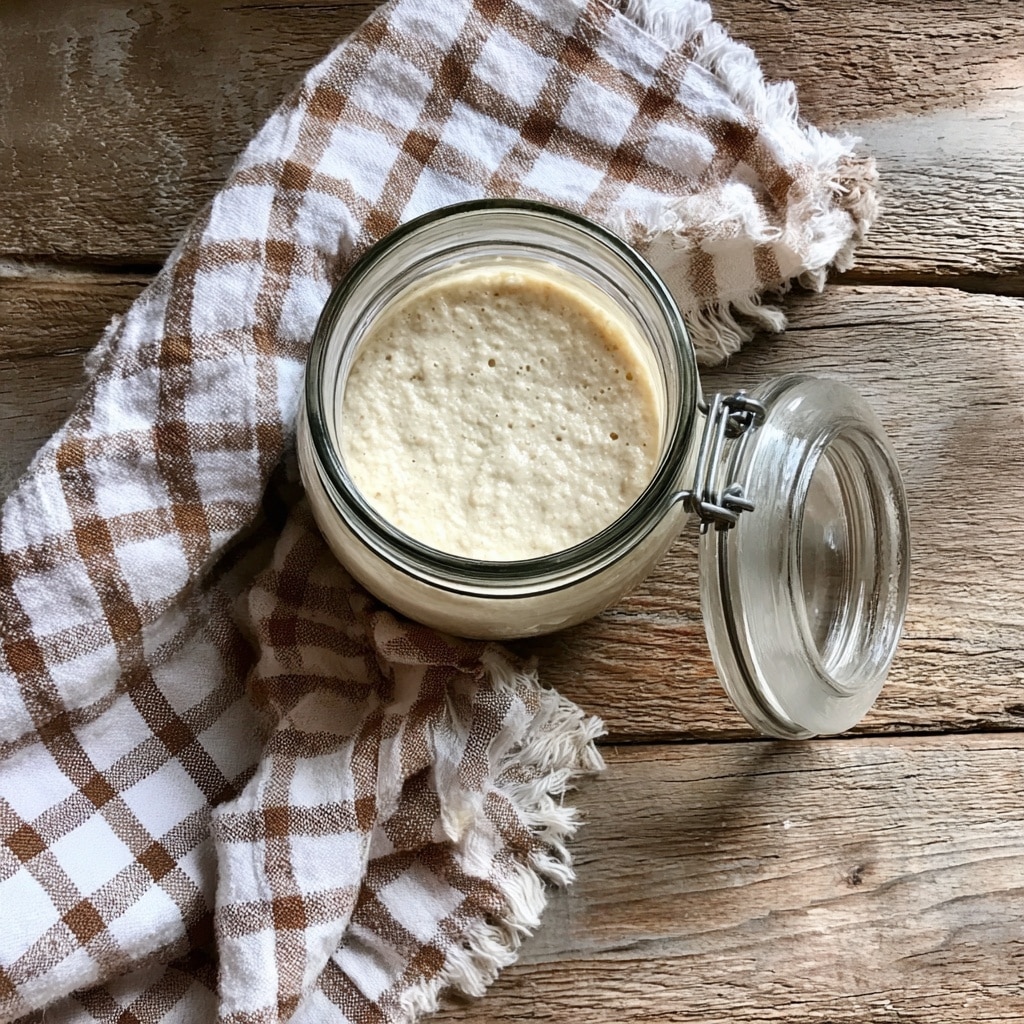
- Step 4: Continue this daily feeding routine until the starter is bubbly and doubled in size, usually within 5 to 7 days.
Tips & Variations
- Use whole wheat or rye flour initially to speed up fermentation, then switch to all-purpose flour for maintenance.
- Maintain your starter at room temperature for daily baking or refrigerate it and feed weekly if baking less often.
- If your starter develops a liquid layer (called hooch), stir it back in or pour it off before feeding.
Storage
Store your active sourdough starter at room temperature if feeding daily. For less frequent use, keep it refrigerated and feed once a week. Before using refrigerated starter, bring it back to room temperature and feed it at least once to reactivate the yeast. Always use clean utensils to avoid contamination.
How to Serve
Serve this delicious recipe with your favorite sides.
FAQs
How do I know if my starter is ready to use?
Your starter is ready when it is bubbly, has doubled in size after feeding, and has a pleasant, slightly sour aroma. It should pass the “float test” by floating in water, indicating good fermentation.
What if my starter develops mold or an off smell?
If you see mold or your starter smells rotten or unpleasant beyond the typical sour aroma, it’s safest to discard it and start fresh. Clean your jar thoroughly to prevent contamination.
PrintClassic Sourdough Starter Recipe
A sourdough starter is a natural leavening agent made from flour and water that captures wild yeast and bacteria to ferment dough. This starter is essential for baking authentic sourdough bread, adding unique flavor and texture through natural fermentation. The process involves daily feedings and fermentation until the starter becomes bubbly and active, indicating it’s ready for baking.
- Prep Time: 10 minutes
- Cook Time: 0 minutes
- Total Time: 7 days (including daily maintenance)
- Yield: Approximately 1 cup of active sourdough starter 1x
- Category: Bread Making
- Method: No-Cook
- Cuisine: International
- Diet: Vegan
Ingredients
Sourdough Starter Ingredients
- 1 cup (120g) all-purpose flour or whole wheat flour
- 1/2 cup (120ml) lukewarm water
Instructions
- Initial Mix: Combine the flour and lukewarm water in a clean glass or plastic container. Stir thoroughly until no dry flour remains. Cover loosely with a cloth or lid to allow airflow.
- Daily Feeding: Discard half of the starter mixture every 24 hours. Add 1/2 cup (60g) flour and 1/4 cup (60ml) lukewarm water to the remaining starter. Stir well to combine. Cover again and let ferment at room temperature.
- Fermentation: Repeat the daily feeding process for 5 to 7 days. During this time, the starter will develop bubbles and rise, signaling active fermentation. When the starter doubles in size within 4 to 6 hours of feeding and has a pleasant tangy aroma, it is ready to be used for baking.
Notes
- Use unchlorinated water to avoid inhibiting fermentation.
- Maintain room temperature between 68-75°F (20-24°C) for optimal yeast activity.
- Whole wheat or rye flour can be used to kickstart fermentation faster due to higher nutrient content.
- The starter can be stored in the refrigerator once active and fed weekly.
- Discarded starter can be used in recipes like pancakes or crackers to avoid waste.
Keywords: sourdough starter, natural yeast, fermentation, bread baking, homemade starter, sourdough fermentation